How to Create a Meaningful Memory Table for a Celebration of Life
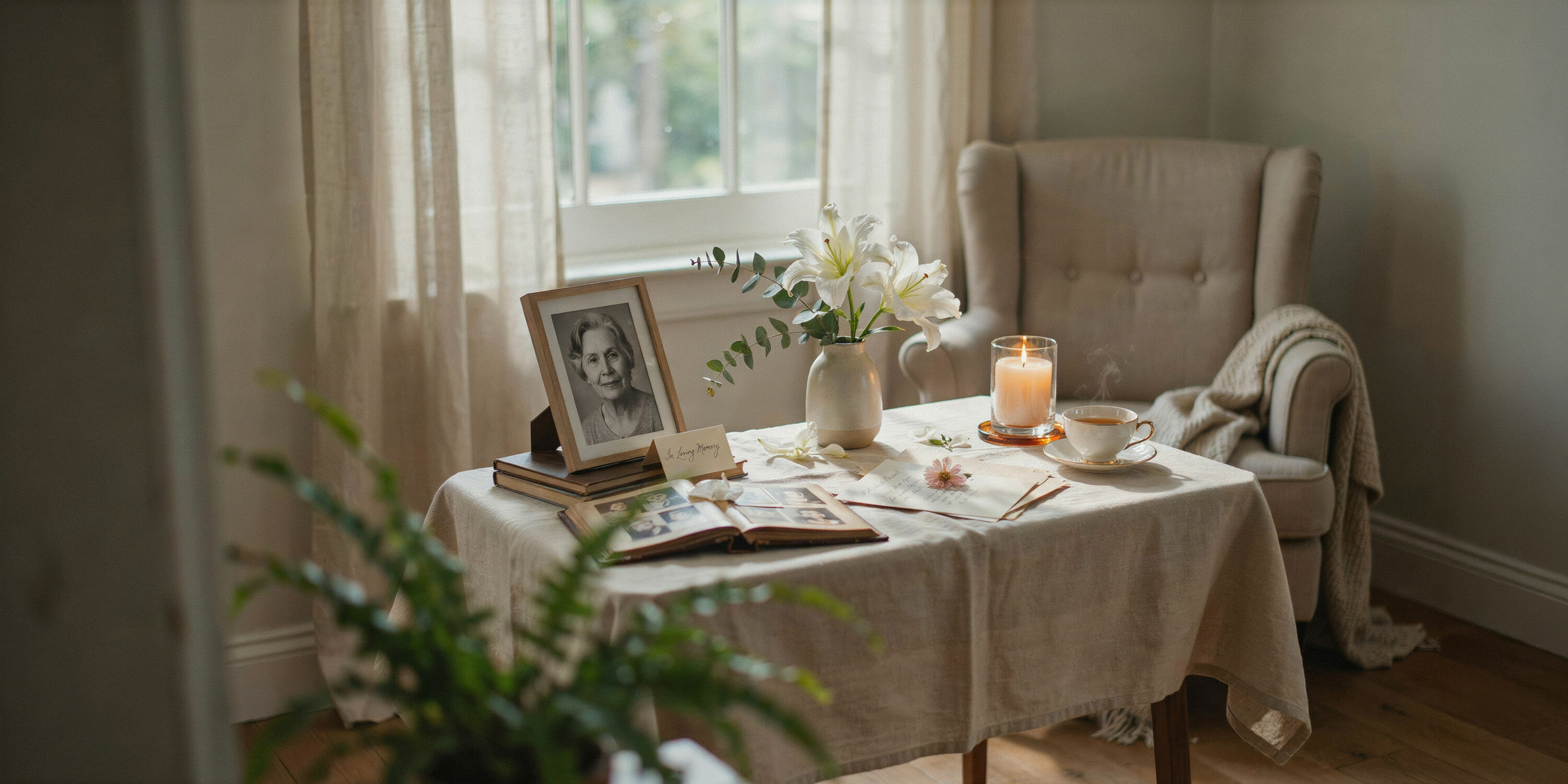
A celebration of life is made up of more than a schedule, a venue, or a guest list. Often, it is the small, personal details that make the gathering feel like the person you're there to remember.
A memory table is one simple way to bring those details together.
A thoughtfully created memory table can give guests a chance to see pieces of your loved one's life, spark conversations, and remember moments they shared. It doesn't need to be elaborate. It simply needs to feel personal.
Whether you're planning a celebration of life at home, at a favorite restaurant, or at an event venue in Austin, TX, a memory table can become a meaningful part of the gathering.
What Is a Memory Table?
A memory table is a display of photographs, personal belongings, keepsakes, and other items that tell a story about someone who has died.
There isn't a set list of things that belong on a memory table.
For one person, it might include family photographs, handwritten notes, and favorite books. For another, it could feature travel souvenirs, artwork, gardening tools, sports memorabilia, or a collection they spent years building.
The best place to start is with a simple question:
What things make you think of them?
What Should You Put on a Memory Table?
There are countless ways to create a memory table, but you don't need to include everything.
Choose a few items that represent different parts of your loved one's life.
Photographs
Photographs are often the heart of a memory table. Imbued Events will handle printing all of your photographs and framing them. You have the option to buy and keep the frames, or rent them.
You might include:
Childhood photographs
Family portraits
Wedding photographs
Pictures with children or grandchildren
Vacation photographs
Pictures with friends
Candid everyday moments
Photographs of pets
Images of favorite places
Don't worry about choosing only perfectly posed or professionally taken photographs. Sometimes the photograph that makes everyone smile is the one that means the most.
Favorite Things
Think about the objects your loved one used, collected, enjoyed, or was known for.
Depending on the person, this might include:
Books
Jewelry
Artwork
Sports memorabilia
Musical instruments
Gardening items
Cooking tools
Travel souvenirs
Awards or certificates
Collections
Handwritten recipes
Letters or cards
These objects can help tell a story that photographs alone can't.
Hobbies and Passions
What did they love to do?
If they spent their weekends on the golf course, consider displaying a favorite golf item.
If they loved gardening, perhaps include a small plant, gardening gloves, or a photograph of their garden.
If they were passionate about music, display an instrument, album, or concert photograph.
If they loved to travel, maps, postcards, photographs, or souvenirs can help bring those memories into the room.
The goal isn't to create a museum of their belongings. Choose items that immediately make you think, “That was so them.”
Include Something Unexpected
Some of the most memorable items may not seem important at first.
A favorite coffee mug.
A well-worn cookbook.
A pair of gardening gloves.
A handwritten grocery list.
A ticket stub from a special trip.
A funny note someone saved for years.
A favorite hat.
These everyday objects can bring back incredibly specific memories.
Sometimes an ordinary object tells a person's story better than something formal or expensive ever could.
Invite Family and Friends to Contribute
A memory table doesn't have to be created by one person.
Ask family members and close friends if they have something they'd like to contribute.
You might say:
“Is there a photograph, keepsake, or small item that reminds you of them?”
You may be surprised by what people bring.
Someone might have a photograph you've never seen. Another person might have a story connected to an object you didn't know was important.
If you're collecting items from several people, keep a simple list of who brought what. This can make returning everything after the celebration much easier.
Consider Adding Labels or Captions
A small amount of context can make a memory table even more meaningful. Imbued Events will handle the design, printing and framing/staging.
You might add a short caption beneath a photograph:
“Family trip to Colorado, 1998.” or Her favorite recipe for Sunday dinner.”
You could also add a sentence about why an object was important.
The descriptions don't need to be long. A few words can be enough to start a conversation.
Create a Memory Table That Feels Like Your Loved One
There is no need to follow a particular decorating style.
If your loved one preferred simple, understated spaces, the memory table can be simple.
If they loved color, flowers, or beautiful objects, bring some of that into the display.
If they were known for a particular hobby or interest, let that naturally become part of the design.
You might incorporate:
Favorite colors
Flowers or greenery
Family photographs
Meaningful fabrics
Candles, where appropriate and permitted
Personal artwork
Favorite books
Small signs or handwritten notes
The display doesn't have to look professionally styled.
It should feel authentic.
Think About the Space Around the Table
When planning the physical setup, remember that guests will likely want to stop, look, talk, and take their time.
Try to place the memory table somewhere that is easy to access without creating a bottleneck.
If the gathering includes a meal or reception, you may want to keep the display away from food and drinks.
If children will be attending, consider whether any fragile or particularly meaningful items need to be placed somewhere safer.
And if you're displaying original photographs, letters, or other irreplaceable items, think about how they'll be protected throughout the event.
A Memory Table Doesn't Have to Be a Table
The idea can be adapted to the space you're using.
You might create:
A bookshelf display
A series of framed photographs
A collection of small display tables
A photo wall
A gallery-style arrangement
A table combined with a slideshow
A display of photographs and objects around the room
If your celebration is taking place at a favorite restaurant or another location where space is limited, a smaller display may work beautifully.
The important thing is creating a place where memories can be seen and shared.
Consider Creating a Memory Book, Too
A memory table can be paired with a memory book where guests can leave messages, stories, or favorite memories.
You could provide a simple notebook or a more personalized book.
Consider adding a sign inviting guests to share something such as:
“Tell us your favorite memory of them.”
The responses can become a meaningful keepsake for the family.
Another option is to provide individual cards that guests can complete and place in a box. This can give people who aren't comfortable speaking during the gathering a quiet way to share something personal.
Don't Feel Like Everything Has to Be Perfect
When you're planning a celebration of life, it can be tempting to think every detail needs to be polished.
It doesn't.
Your loved one's favorite photographs may not all be the same size. The keepsakes may not match. Someone may bring something at the last minute that becomes one of the most meaningful pieces of the display.
That's okay.
A memory table isn't about creating a perfect presentation. It's about creating a space where people can pause, remember, and tell stories.
Celebration of Life Planning in Austin, TX
Creating a memory table is just one of the many personal details that can go into planning a celebration of life.
At Imbued Events, we help families in Austin, TX bring those details together as part of a thoughtful, personalized gathering.
From organizing the overall flow of the event to coordinating the details that make it feel personal, our goal is to make the planning process feel more manageable while helping create a celebration that reflects your loved one.
Whether you're gathering at home, in a backyard, at a favorite restaurant, or in an event space, there are many ways to make the setting feel connected to the person you're remembering.
Start with what you know about them.
The things they loved.
The places they went.
The people they cared about.
The little things that make you think of them.
Those are the details that can make a celebration of life feel truly personal.